
Services
Counselling in Nelson, BC
Transformation that reaches beyond insight
I'm a Registered Clinical Counsellor offering integrated counselling that brings together talk therapy, body awareness, and practical tools for lasting change. Whether you're navigating anxiety, relationship patterns, or sensing that life could hold more ease and meaning, we'll work together to create transformation that reaches beyond intellectual insight into embodied experience.
My approach weaves Somatic Experiencing® principles, mindfulness practices, and optional touch work into sessions tailored to your needs. Most extended health plans cover RCC services.
How sessions work
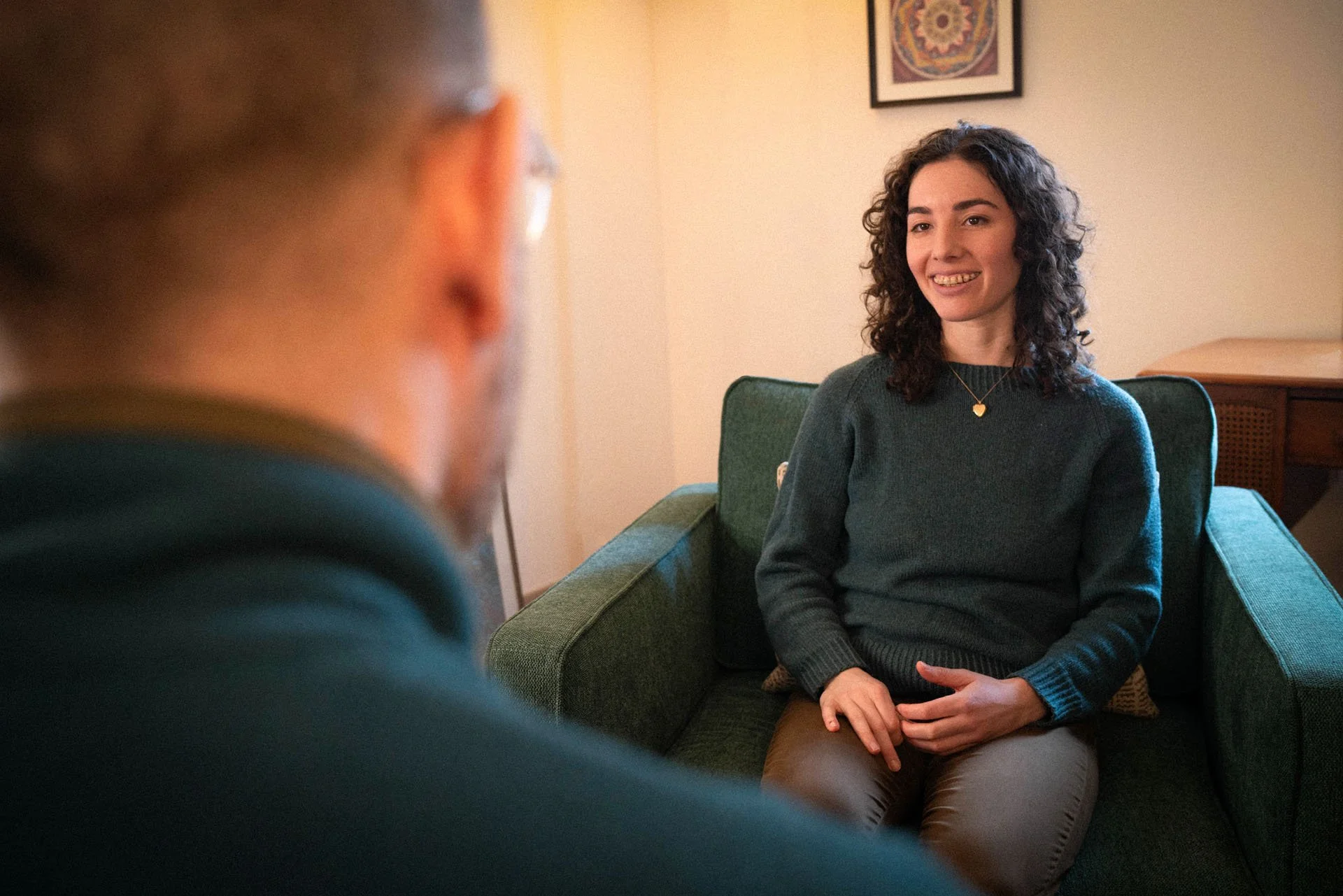
Sessions are shaped by what you need and how your nervous system naturally processes experience. In some cases, we need to piece together a coherent narrative of where you’ve been and how you arrived where you are. For others of you, talking about the past is too triggering or simply not the path to deeper healing. Some sessions may be focused on understanding the connections between events that occurred at different times in your life, other sessions on making a practical plan for dealing with current challenges, and still others on noticing the subtle patterns of emotional reactivity that are constantly occurring beneath the level of conscious awareness.
Meeting you where you are
We might begin with the question or concern that brought you here today. Unlike some somatic therapists, I am happy to give space for you to unpack the details of your experience so that I can understand what you’re carrying. I'll listen fully, not derailing your train of thought, but also gently noticing what happens in your body as you speak. Where does your breath catch? When does your voice shift? These subtle cues often reveal what words alone cannot.
Other clients arrive already sensing that talking hasn't been enough, that something in their body needs attention. For them, we might move more quickly into somatic awareness, letting the body's wisdom guide our exploration.
Working with body awareness
Whether we arrive here immediately or gradually, body-centred work involves noticing physical sensations with curiosity: the tightness in your chest, the flutter in your stomach, the way your shoulders carry tension. I'll guide you to track these sensations, watching how they shift and change.
We work in small, manageable pieces: what Somatic Experiencing® practitioners call titration. We might touch briefly on a challenging sensation or memory, then return to a place of calm or stability. This gentle oscillation allows your nervous system to process without becoming overwhelmed.
Following what emerges
As we track sensations and stay present with your experience, you may notice spontaneous movements, shifts in breathing, waves of emotion, or unexpected insights. These are signs of your nervous system finding its way toward resolution. My role is to support this natural unfolding, whether it expresses through words, sensations, movements, or silence.
Integration happens in multiple ways
For some, understanding creates the opening for change: making connections between past experiences and current patterns, seeing the through-line of your story with fresh eyes. For others, change happens through the body first, with understanding following later. Most often, intellectual insight and embodied transformation are an interwoven process.
Building capacity over time
Whether our work together emphasizes talking, body awareness, or a fluid integration of both, the goal is the same: expanding your nervous system's flexibility, deepening your capacity for self-awareness, and helping you live with more ease and authenticity.
Touch work in counselling
Touch work can support healing in ways that talk alone sometimes cannot. It may help when:
- Talk therapy has created insights but you're seeking the felt experience of change
- You notice your body holds tension, bracing, or shutdown patterns
- You feel disconnected from your body or stuck in your head
- You want to experience co-regulation: your nervous system finding safety and ease in connection
- You're working with early developmental wounds that existed before you had words
- You need access to healing that happens beneath the level of language
When touch work feels right for you, it may take different forms:
Brief seated contact during regular counselling sessions (a hand on your shoulder, grounding touch) to support regulation or deepen awareness of sensations as they arise.
Table work when appropriate and desired. This deeper somatic work can be part of your counselling sessions and is billable as counselling with RCC coverage. Table work is more interactive than pure craniosacral therapy, with ongoing verbal dialogue as we track your experience together.
Touch work is completely optional and always proceeds with your consent. Many clients experience profound healing through talk-based somatic work without any physical contact.
When to choose counselling
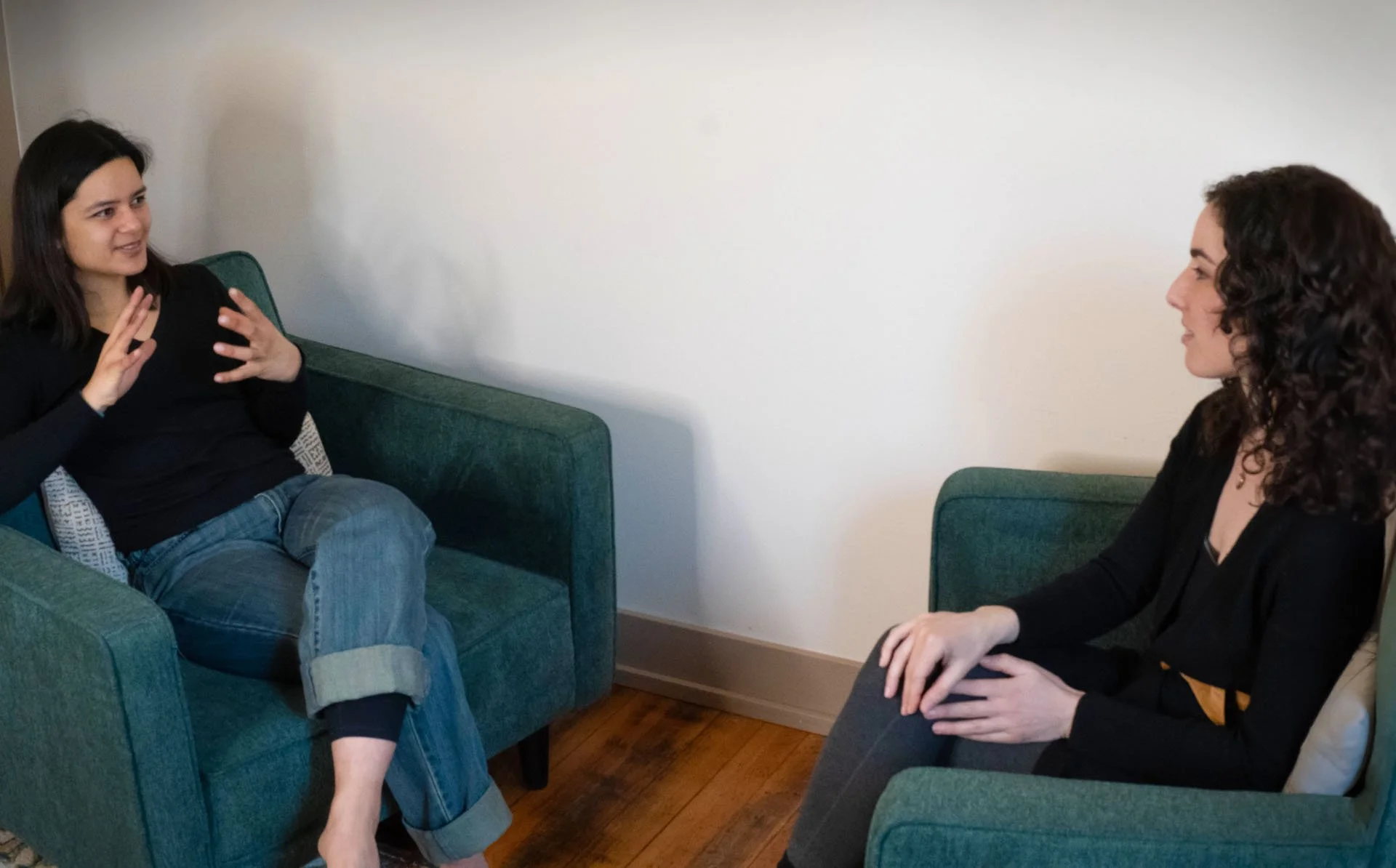
Counselling is often the right fit when you:
- Want to address specific life challenges or patterns through talk integrated with body awareness
- Value insurance coverage through extended health benefits
- Are interested in understanding yourself more deeply while creating practical change
- Have done traditional talk therapy but sensed something was missing
You might explore craniosacral therapy instead or in addition when:
- You want deep nervous system regulation through primarily non-verbal work
- You're drawn to accessing healing beyond words
- You benefit from profound states of rest and integration
Learn more about craniosacral therapy →
Many clients integrate both modalities over time, discovering what combination serves them best.
Who this approach serves
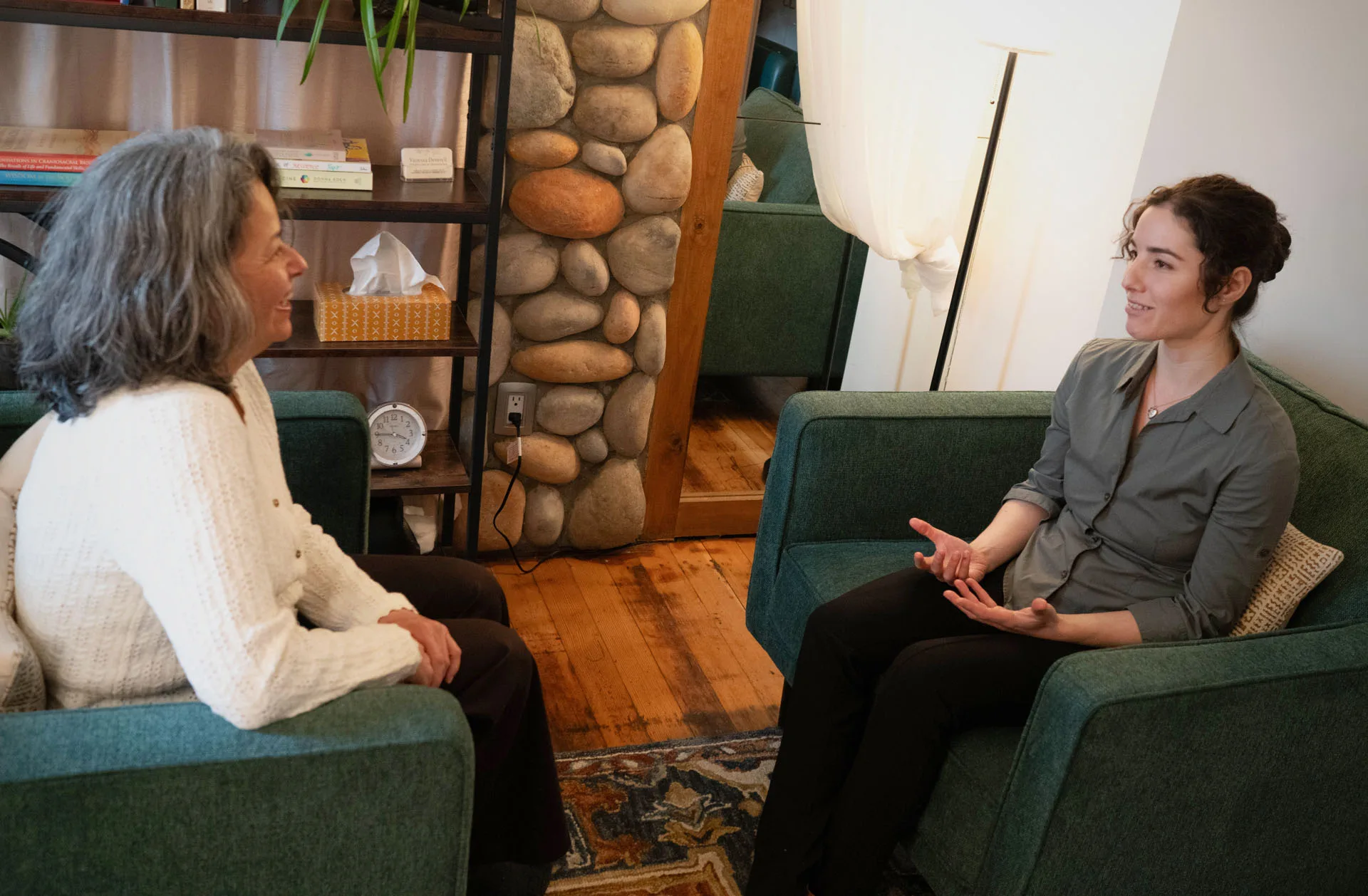
This work particularly resonates with those who have done traditional therapy but sense something is missing: you've gained insights but haven't seen lasting change in how you feel, your relationships, or your stress responses.
You might feel disconnected from your body or emotions. You're ready to engage with your whole self: mind, body, and spirit. You appreciate depth and nuance over quick fixes, and you're seeking lasting transformation, not just symptom relief.
If you've never found talk therapy interesting or compelling, or if you're simply curious about body-centred approaches, you're welcome here too.
I regularly work with anxiety, trauma, attachment and relationship patterns, emotional regulation, high sensitivity, burnout, and perfectionism.
Practical details
Sessions: 50 minutes standard, with 70 and 90-minute sessions available for deeper work
Frequency: Starting with weekly or biweekly sessions is often recommended to solidify real change. Ultimately this is your choice; it's not a requirement for working together. Sliding scale options available if this would help you access more frequent sessions.
Location: In-person sessions in Nelson, BC. Online counselling available throughout BC and some other Canadian provinces; contact me to inquire about specific locations.
Insurance: Most extended health plans cover RCC services. View rates and insurance details. Table work integrated into counselling sessions is also covered.
Finding the right counselling relationship
Choosing a therapist is deeply personal. I'd be glad to talk with you about what you're experiencing and how we might work together.
I offer a free 20-minute consultation by phone or video. It's the best way to find out whether we'd be a good fit.
Counselling sessions are covered by most extended health plans.